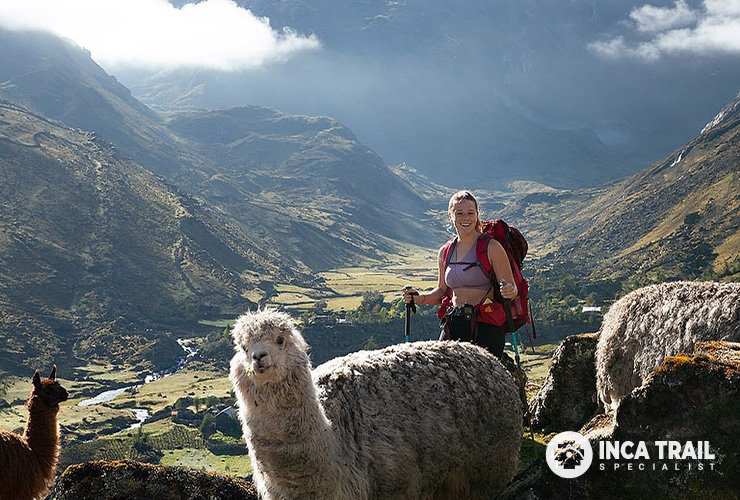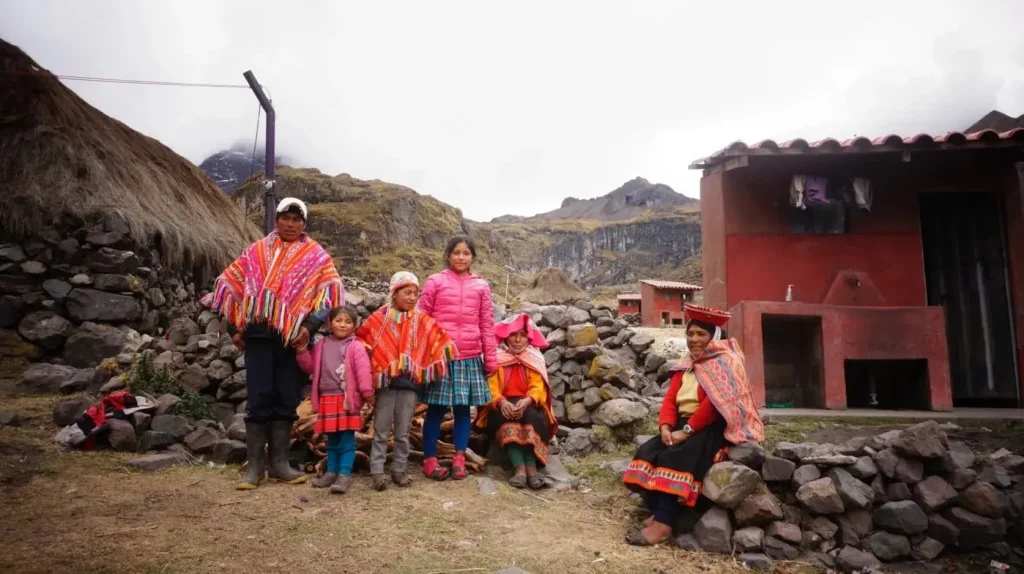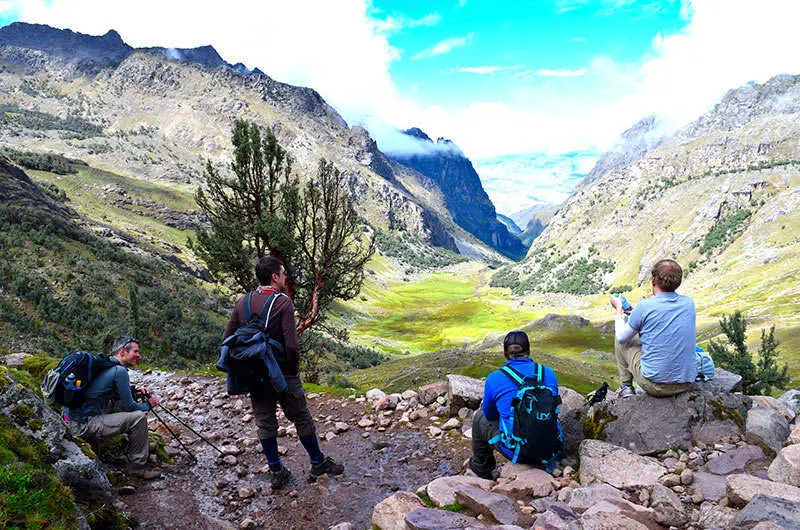
This Lares Trek FAQ answers the practical questions travelers ask before booking: difficulty, altitude, permits, weather, packing, camping, prices, communities and the connection to Machu Picchu.
Lares Trek basics
What is the Lares Trek?
Lares is a network of high-Andean trekking routes in the Cusco region. It is known for glacial lakes, mountain passes and Quechua-speaking communities with strong farming, herding and textile traditions.
How many days is the Lares Trek?
The Lares Trip itinerary lasts four days, including Machu Picchu. Other operators offer different lengths and routes, so compare named villages, passes and overnight stops.
How far is the trek?
The four-day itinerary covers approximately 40–45 km / 26–28 mi. GPS measurements vary according to camp placement and route adjustments.
What is the highest point?
Siclla Qasa is approximately 4,830 m / 15,846 ft on this itinerary.
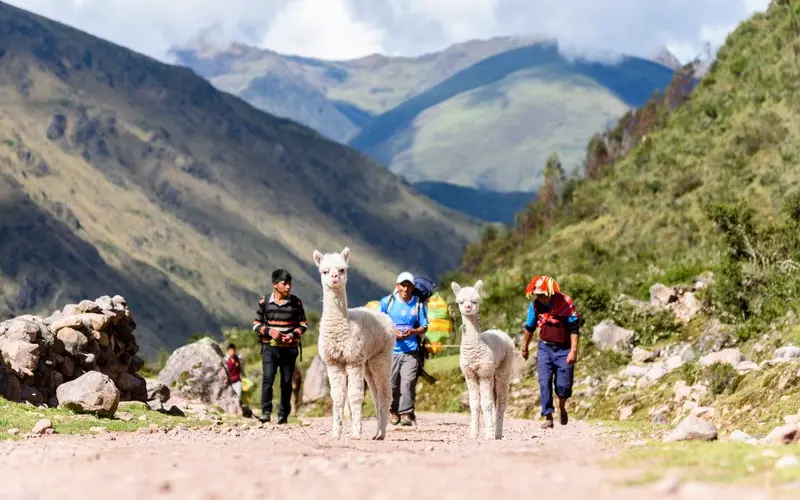
Difficulty and preparation
How difficult is the Lares Trek?
It is challenging because of the altitude, sustained climbs, cold camps and consecutive hiking days. Read the full difficulty guide.
Do I need trekking experience?
Previous multi-day experience helps but is not mandatory. You should train consistently and be comfortable hiking uphill for several hours.
How should I train?
Combine aerobic exercise, leg strength, hills, descents and back-to-back hiking days for eight to twelve weeks. Use the Lares training plan.
How many acclimatization days do I need?
At least two or three nights around Cusco or the Sacred Valley is a practical minimum for many travelers. Individual risk varies.
Permits and booking
Does Lares require an Inca Trail permit?
No. Standard Lares routes do not use the limited Classic Inca Trail permit.
Do I need a Machu Picchu ticket?
Yes. A specific circuit, date and entry time must be reserved. Complete operators normally manage this using passport information.
When should I book?
Book several months ahead for May through September. Machu Picchu circuits, trains and hotels can sell out even when the Lares trail remains available.
Weather and timing
What is the best time for Lares?
May through September usually brings the driest conditions. Nights are cold and the busiest months require earlier booking.
Can I trek in February?
Lares has no blanket February closure like the Classic Inca Trail, but heavy rain may cause unsafe trail or road conditions.
How cold does it get?
High camps can fall below freezing, especially during the dry-season winter. Bring thermal layers, insulated jacket, gloves and a properly rated sleeping bag.
Accommodation and logistics
Where do we sleep?
The mountain section uses tents. The final night is spent in an Aguas Calientes hotel before Machu Picchu.
Is camping equipment included?
Tents, sleeping mats, dining facilities and kitchen equipment are included. A sleeping bag is normally rented separately.
Are there showers and electricity?
Do not expect showers, reliable electricity, Wi-Fi or mobile service at mountain camps. Carry a power bank and basic hygiene supplies.
Who carries the luggage?
Pack animals carry group equipment and an agreed personal duffel allowance. Hikers carry a daypack with water, layers, medication, passport and valuables.
Food and water
Are meals included?
Meals during the trekking section are included. The final lunch after Machu Picchu is not included.
Are vegetarian meals available?
Yes, dietary requests can be arranged in advance. Travelers with serious allergies should provide precise information and carry prescribed medication.
Is drinking water provided?
Follow the guide’s refill and treatment instructions. Never assume untreated stream or tap water is safe.
Machu Picchu connection
Does Lares end at Machu Picchu?
The trekking section ends before Machu Picchu. Travelers continue through Ollantaytambo by train to Aguas Calientes and visit Machu Picchu the next morning.
Do you enter through the Sun Gate?
No. The Sun Gate walking arrival is characteristic of the Classic Inca Trail.
Culture and responsible travel
Which communities are visited?
The itinerary crosses toward Cuncani. Other Lares variations may visit Quishuarani, Cancha Cancha or different settlements.
Can I photograph residents?
Ask permission first and accept refusal immediately. Your guide can help communicate appropriately.
Can I buy textiles?
Opportunities may be available. Carry soles, buy directly when possible and respect the stated price for skilled work.
Cost and packing
How much does the Lares Trek cost?
The current Lares Trip group price is USD 640 per person, subject to change. Compare full inclusions rather than headline price alone.
What should I pack?
Bring layered clothing, waterproof shell, broken-in boots, sun protection, headlamp, reusable water containers and personal medication. See the complete packing list.
Are trekking poles useful?
Yes, especially for steep or wet descents. They are normally available to rent.
Is Lares right for you?
Choose Lares for living culture, quiet paths and high-mountain scenery. Choose the Inca Trail for archaeology and the Sun Gate, or Salkantay for a longer glacier-focused journey.
Begin with the complete Lares travel guide, review permits and booking, and check the live Lares Trek 4 Days itinerary and availability.