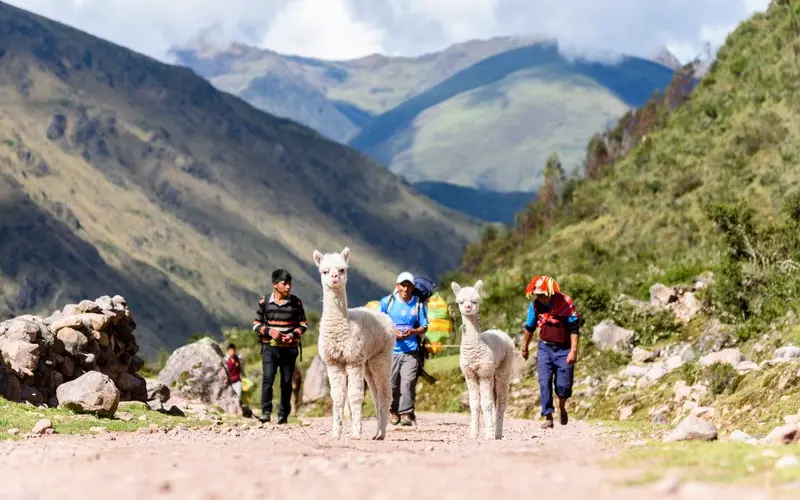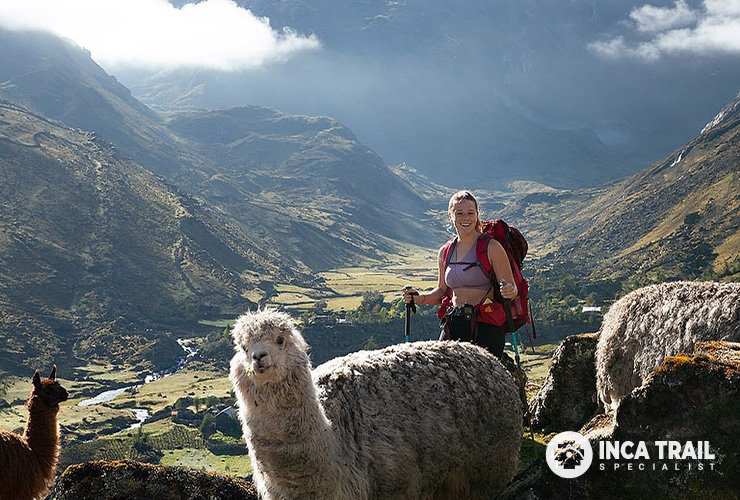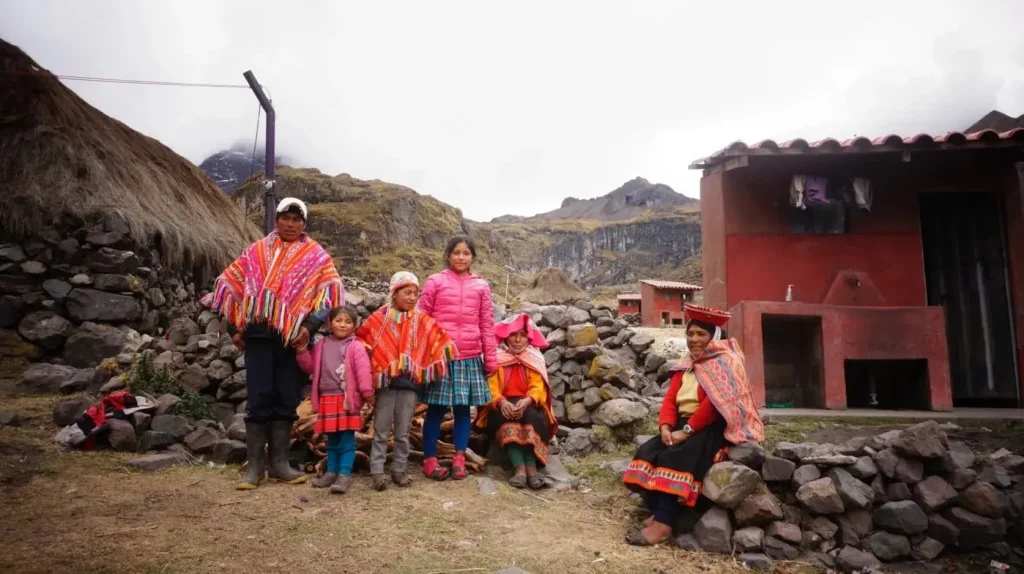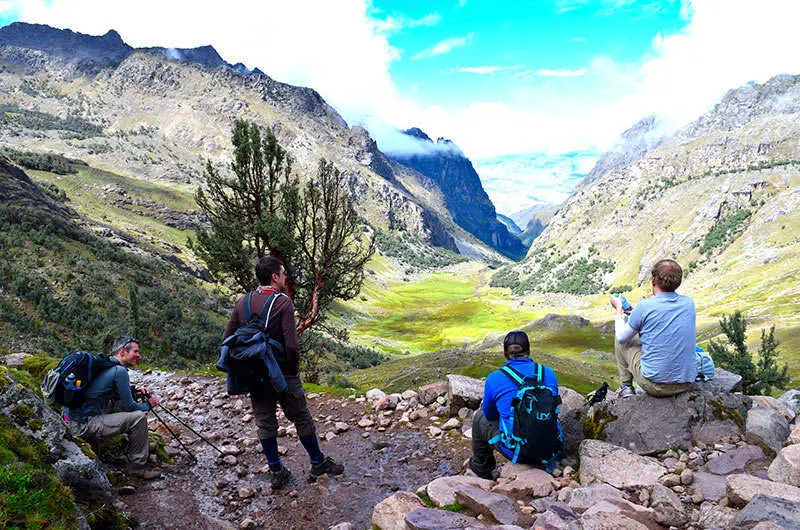
The communities of the Lares Valley are the cultural heart of the Lares Trek. Quechua remains widely spoken, while families continue high-altitude farming, herding llamas and alpacas, and producing textiles whose techniques and designs pass between generations.
A trek through Lares is therefore more than a scenic alternative to the Inca Trail. It is a journey through inhabited landscapes. Visitors should approach each village as a home and working community, not as an attraction created for tourism.
Lares communities at a glance
- Language: Quechua and Spanish
- Traditional livelihoods: farming, camelid herding and weaving
- Communities on common routes: Cuncani, Quishuarani, Cancha Cancha and settlements around Lares
- Important: the exact villages depend on the selected route
- Responsible behavior: ask before taking photographs and buy directly when possible
Why communities define the Lares experience
Official Peruvian tourism material describes Lares as a route through Quechua-speaking villages where tuber cultivation, llama and alpaca grazing, and textile production remain important. PROMPERÚ has also called it the “Weavers Way.”
Unlike an archaeological route focused on the past, Lares introduces travelers to living traditions. Houses, fields, corrals, paths and weaving practices form one connected cultural landscape.
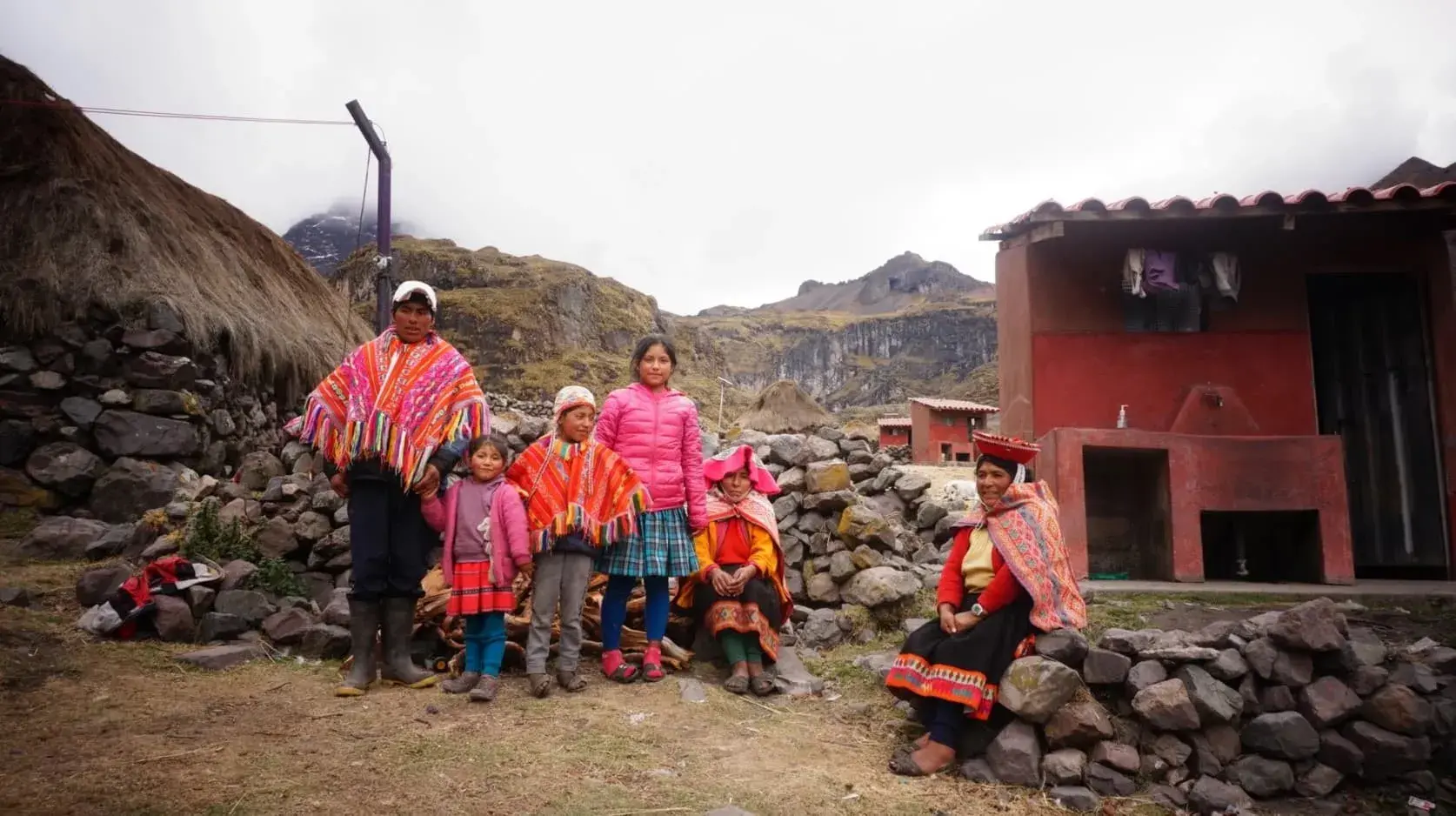
Cuncani
Cuncani is one of the best-known settlements associated with Lares trekking routes. On the four-day Lares Trip itinerary, hikers descend toward Cuncani after crossing Siclla Qasa. The surrounding landscape includes high pastures, traditional homes and routes connecting families with Lares town.
Visitors may see residents in distinctive local clothing, but clothing should never be treated as a costume. Ask permission before portraits and follow the guide’s advice about culturally appropriate interaction.
Quishuarani
Quishuarani appears on another popular Lares route, connected with high lakes and the descent toward Lares. Peru’s tourism inventory identifies the Quishuarani–Lares trekking corridor near Laguna Seletecse, on land administered by the Lares Ayllu Talana community.
This variation emphasizes lakes, waterfalls and high-Andean scenery. It demonstrates why travelers should confirm the exact trail instead of assuming every “Lares Trek” visits the same places.
Cancha Cancha and other route variations
Cancha Cancha is associated with routes that approach the Sacred Valley through the Lares watershed. Other itineraries begin near Pumahuanca or travel through different hamlets. Trail names are often used broadly by operators, even when their villages, passes and finishing points differ.
Before booking, request a day-by-day route with every community and pass named. This helps travelers understand the cultural setting and prepare for the correct altitude profile.
Daily life in the high Andes
Potatoes and other tubers are adapted to the altitude and cold. Llamas and alpacas provide fiber and remain part of local pastoral economies. Families move through landscapes shaped by planting cycles, pasture, water sources and seasonal weather.
Travelers should remember that a trek passes through productive land. Stay on the trail, close gates when instructed, avoid disturbing animals and never enter a home or field without invitation.
Quechua language
Quechua is an active community language, not only an Inca-era relic. A guide can help translate, but learning a respectful greeting shows interest. Language varies by region, and visitors should avoid correcting pronunciation based on a phrase learned elsewhere.
Weaving and textiles
Textile production is one of the strongest cultural associations of Lares. Knowledge can include fiber preparation, spinning, dyeing, loom setup and the creation of patterned cloth. Designs and color choices may convey local identity, family knowledge or practical preferences. Learn more in the guide to traditional Lares textiles and weaving.
Authentic handwoven pieces take time. A higher price than a factory-made souvenir reflects labor, skill and material. Ask the maker about the fiber and process rather than bargaining aggressively.
How tourism can help
Well-managed tourism can create income through guiding, pack-animal services, food, camps, transport and direct textile sales. It can also create pressure through intrusive photography, waste, unfair prices or staged encounters.
Choose operators that explain community relationships clearly, employ local services fairly and follow leave-no-trace practices. Gifts should be coordinated with community leaders or guides rather than distributed randomly, especially to children.
Responsible photography
- Ask before photographing a person.
- Accept “no” immediately and without argument.
- Do not photograph children without permission from a responsible adult.
- Do not promise to send images unless you can fulfill the promise.
- A purchase does not automatically buy consent for a portrait.
- Use landscape photography when personal photography is inappropriate.
Buying textiles responsibly
- Buy directly from the maker or a transparent community association.
- Ask whether the piece is handwoven or machine-made.
- Ask about alpaca, sheep or synthetic fibers without assuming.
- Respect the stated price and the labor involved.
- Carry Peruvian soles because card service may be unavailable.
What to bring
Bring layered clothing, rain protection, sun protection and cash. Small communities may not have shops, ATMs or reliable mobile service. Pack out wrappers and personal waste. Use the complete Lares Trek packing list.
Frequently asked questions
Does every Lares Trek visit the same communities?
No. Lares is a network of routes. Confirm the named villages, passes and trailhead before booking.
Can visitors buy textiles?
Yes, opportunities often exist, but availability depends on the route and community. Carry cash and purchase respectfully.
Can I photograph residents?
Only with permission. Your guide can help ask in the appropriate language.
Is a community visit staged?
It should not be. Good operators facilitate respectful contact while recognizing that visitors are entering people’s homes and working landscapes.
Experience Lares respectfully
The strongest memories of Lares often come from small moments: a greeting on the trail, alpacas moving across a hillside or a weaver explaining her work. Respect makes those encounters more meaningful for both visitor and host.
Start with the Lares travel guide, review the four-day route and check the Lares Trek 4 Days.